
Commercial Roofers in North Myrtle Beach, AL
For commercial properties in North Myrtle Beach, AL, the defensible choice between repair, restoration, and replacement starts with roof-system condition, moisture findings, drainage performance, and remaining service life. North Myrtle Beach runs on occupancy. A hotel with a leaking membrane over a guest wing isn't a line item, it's a room that can't be sold tonight. We work this stretch of the coast with that reality in front of us, from the Ocean Boulevard motel strip down through Barefoot Landing and the golf corridor around Cherry Grove.
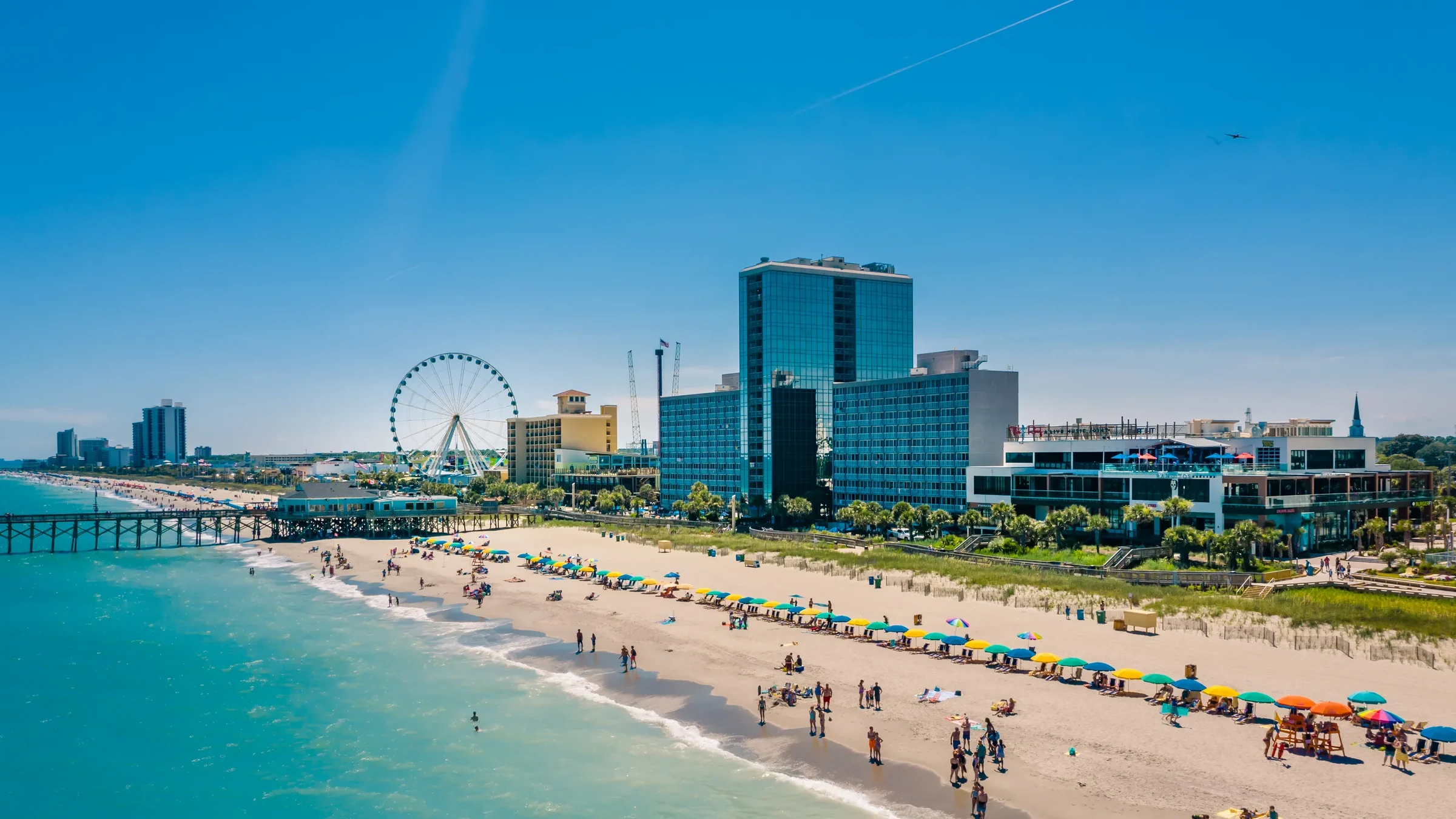
Ocean Boulevard's Hotel and Motel Roofs
Most of the properties along Ocean Boulevard are low-slope buildings with a pool deck, a breezeway, or an attached restaurant tucked under the same membrane. When a leak shows up in a guest corridor, the general manager doesn't want a theory, they want a scope and a schedule that keeps the rest of the property open. We inspect room by room where needed, tie leak paths back to actual roof detail failures, and write the work order so housekeeping and front desk know exactly which sections are affected and for how long.
A lot of this hotel stock was built or re-roofed in phases over the decades, which means a single property can carry two or three membrane generations side by side. We map that out before we quote anything, because a repair plan that ignores the seam between a 2008 TPO section and a 2015 recover almost always comes back as a callback.
Barefoot Landing and the Coastal North Retail Strip
Barefoot Landing's mix of retail, restaurant, and entertainment buildings, including venues like the Alabama Theatre and House of Blues, sit on large flat roofs with a lot of rooftop equipment, kitchen exhaust, and stage rigging penetrations. Those penetrations are where we find most of the trouble: grease-contaminated membrane near kitchen vents, deteriorated pitch pans around old conduit runs, and drains that were never resized when a tenant added equipment.
North of Barefoot Landing, the Coastal North retail corridor along Highway 17 carries a mix of national chains and local shops in strip centers. Multi-tenant roofs here need work orders that respect lease lines. We coordinate around business hours as well as weather windows, so a shoe store doesn't lose a Saturday because a neighboring unit needed emergency access.
Wind Load and Salt Exposure on This Stretch of Coast
North Myrtle Beach sits inside the wind-borne debris region under South Carolina's coastal building code, which means edge metal, fastening patterns, and field seams all have to meet a higher bar than roofs twenty miles inland. We size fastener schedules and perimeter attachment to the actual exposure category of each building, not a generic spec, because a roof that passes on paper can still lift at the edge in a Category 1 event if the perimeter zone was under-fastened.
Salt air is the quieter problem. It works on exposed fasteners, HVAC curbs, and galvanized edge metal year-round, storm season or calm season alike. On oceanfront properties we see corrosion rates that would be unusual even ten miles inland, so our maintenance checks look specifically at fastener heads, coping seams, and any dissimilar-metal contact points where galvanic corrosion accelerates.
- Room-by-room leak tracing on occupied hotel wings
- Perimeter fastening review against wind-borne debris region requirements
- Kitchen exhaust and grease-contaminated membrane repair at restaurant roofs
- Drain and scupper capacity checks after tenant equipment changes
- Fastener and edge-metal corrosion inspection on oceanfront buildings
- Phased work orders that respect lease lines in multi-tenant retail
Cherry Grove and the Golf Corridor's Clubhouse Roofs
The golf courses and clubhouses through Cherry Grove and the inland side of North Myrtle Beach carry a different roof profile than the beachfront hotels, often steep-slope shingle or metal over a clubhouse with a flat-roofed cart barn or maintenance building behind it. Those flat sections get less attention because nobody's staying overnight above them, but they're usually where the actual leaks originate, feeding water down into areas nobody's checked in years.
We treat clubhouse maintenance buildings and cart barns as part of the same service call as the main structure, because a property manager juggling golf operations doesn't need three separate vendors for one site.
Storm-Season Planning for Occupied Buildings
A hotel or retail building can't close for a week to get storm-ready. We build pre-season checklists around what can be done without shutting down: securing loose flashing, clearing drains before the first named storm, documenting existing conditions so post-storm claims have a clean baseline. After a storm passes, we prioritize buildings with active occupancy first, since a leak over a lobby or a stocked retail floor causes damage faster than one over an empty back-of-house space.
We also keep a straight line between what we find and what we recommend. If a coating or a targeted recover buys a hotel roof several more seasons without a full tear-off during peak occupancy, we say so. If the deck is compromised and a phased tear-off during shoulder season is the only real answer, we say that too.
Questions North Myrtle Beach Property Managers Ask
Can roof repairs happen while the hotel stays fully booked?
In most cases, yes. We schedule access, staging, and noisy work around guest hours and coordinate with front desk and housekeeping so affected sections are clearly marked and time-boxed.
How much does salt air actually shorten a roof's service life here?
It varies by exposure and how well fasteners and edge metal were specified originally. Oceanfront buildings need more frequent fastener and coping inspections than properties set back from the water, which is why we check corrosion points on a shorter cycle for beachfront roofs.
Do multi-tenant retail roofs at Barefoot Landing need separate scopes per tenant?
Often yes, especially where kitchen exhaust or added rooftop equipment has changed the membrane condition in one unit but not others. We write scopes by roof section so tenants aren't billed for problems that aren't theirs.
What should we document before hurricane season for insurance purposes?
Photos of existing membrane condition, drain and scupper clearance, and any prior repair locations. That baseline record makes post-storm damage assessments faster and more defensible.
Are golf course clubhouse roofs handled differently than hotel roofs?
The main structure is often steep-slope, but attached flat sections like cart barns and maintenance buildings get the same low-slope inspection and repair approach as any commercial roof, just scheduled around golf operations instead of guest occupancy.