
Roofing a Grocery Store That Never Really Closes
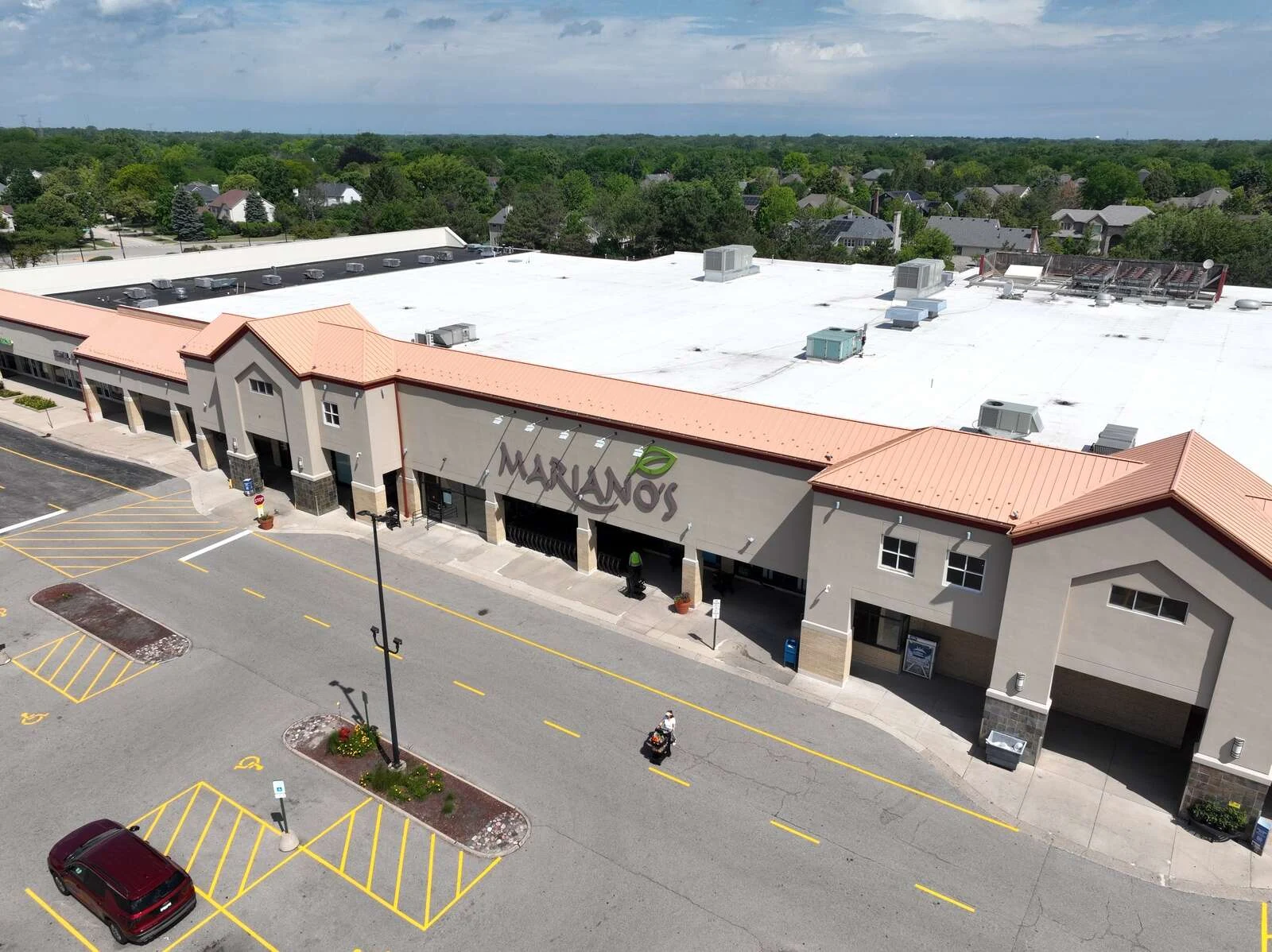
A grocery store roof carries more rooftop refrigeration load and runs closer to continuous operation than almost any other retail building on the Grand Strand. We treat every grocery roof call differently than a standard retail account because a leak here is rarely limited to a ceiling stain - it's a food-safety and equipment-damage problem that starts costing money within hours.
Refrigeration and Condenser Load on the Roof
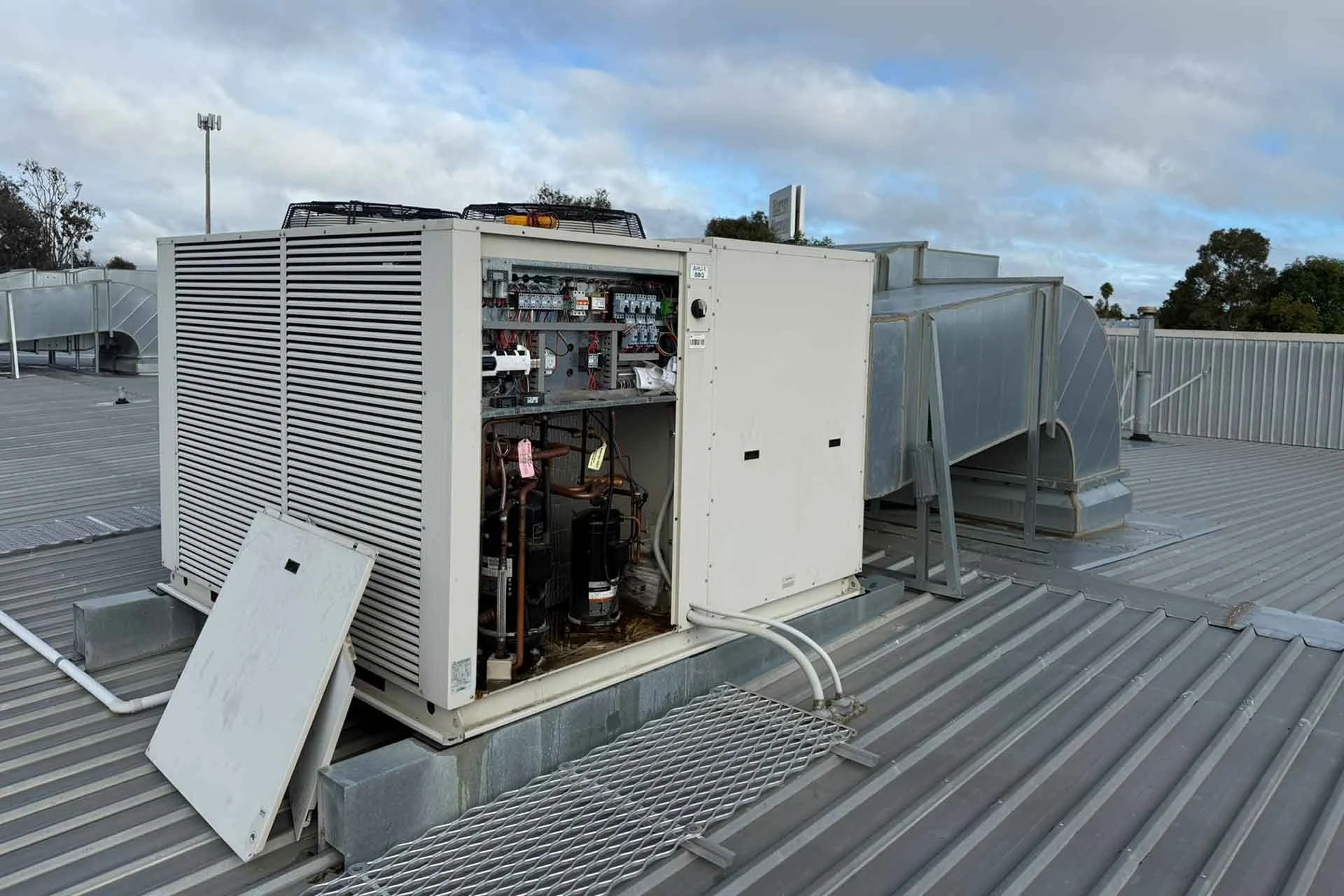
Walk-in cooler and freezer condensing units sit on the roof of nearly every grocery store, and they run around the clock regardless of season. Their curbs and tie-downs take more vibration cycling than standard HVAC equipment, and the refrigerant lines running across the deck are another penetration point that needs proper flashing and support.
We inspect refrigeration curb condition on every grocery service visit specifically because a loosened tie-down or a cracked curb flashing here can cause more than a simple leak - it can take a freezer case offline and put inventory at risk before anyone notices water on the roof.
Condensate lines from these units also need to route to an actual drain rather than discharging onto the membrane, which is a detail we check that often gets missed during equipment swaps by HVAC contractors who aren't focused on the roofing side.
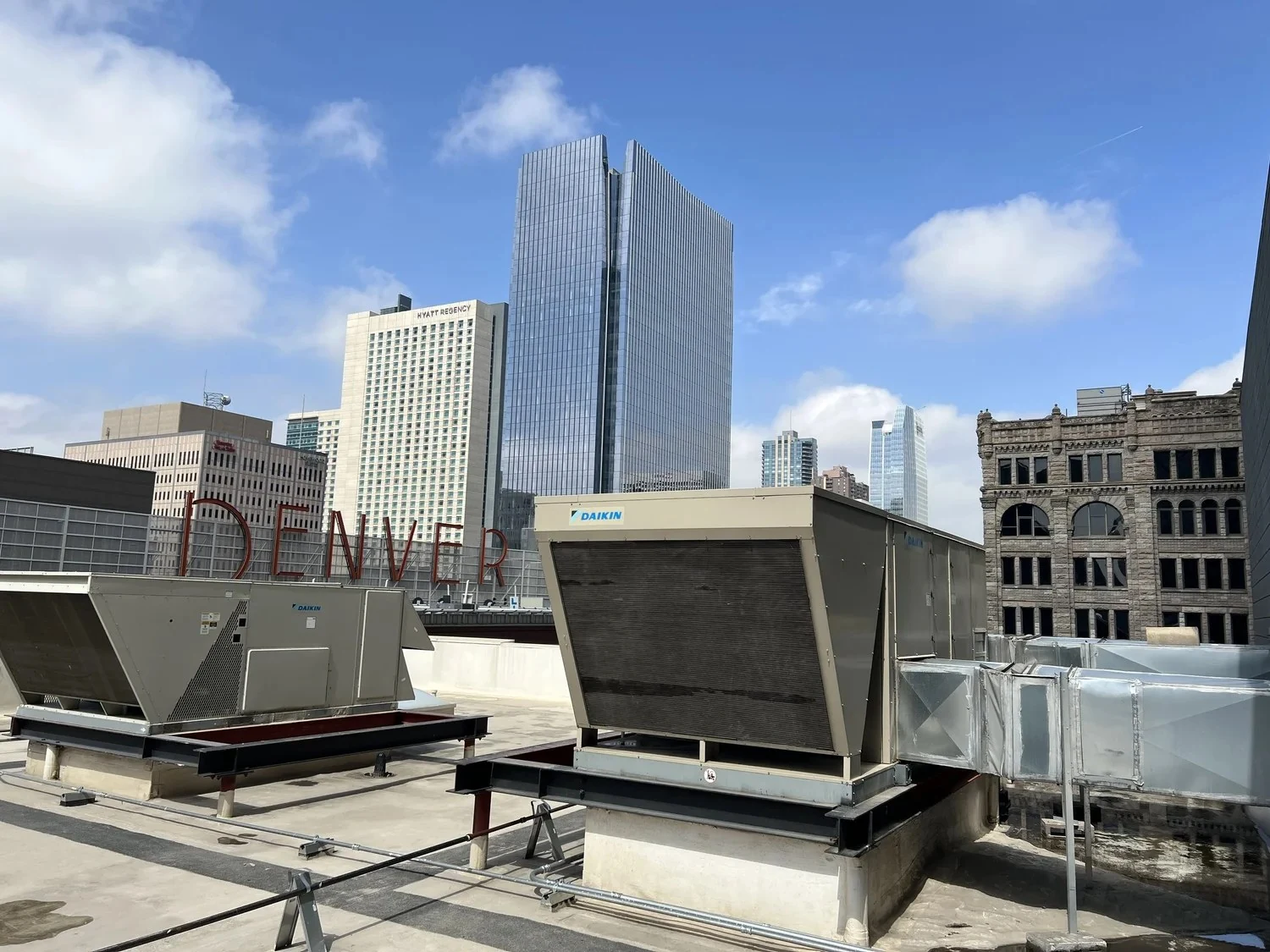
Grocery stores that have added deli, bakery, or prepared-food sections over the years often carry extra exhaust and makeup-air equipment installed after original construction, sometimes without matching the roof's original attachment standard. We flag any equipment added outside the original roofing scope during inspection, since that's a common source of a leak that seems to come from nowhere.
Why Leak Response Time Matters More Here
Water finding its way into a grocery store doesn't stay contained to one aisle. It travels along ceiling grids and shows up over dry goods, produce displays, or electrical panels far from the actual roof penetration that caused it. A slow response turns a small membrane failure into spoiled inventory and a store closure risk.
We prioritize grocery leak calls the same way we prioritize hospital and restaurant kitchen calls, because the downstream cost of delay is disproportionate to the size of the actual roof problem.
Insurance and health-department documentation also matter more here than on a typical retail claim. We photograph and log the source and timeline of any leak affecting product or sales floor space so a store director has a clear record to work from if a claim or an inspection follows.
What We Document on Every Grocery Roof Inspection
Rooftop solar arrays, increasingly common on newer grocery construction and larger anchor renovations, add another layer of coordination since panel racking penetrates the membrane at regular intervals across a wide area. Where a store has solar installed, we work with the system owner on access and re-flashing so a roof project doesn't interrupt panel output any longer than necessary.
- Refrigeration and condenser curb tie-down condition
- Condensate line routing and drain connection
- Membrane condition around every rooftop unit and skylight
- Drain and scupper capacity for the store's actual roof area
- Loading dock canopy and rear entrance flashing condition
- Any prior patch work near refrigeration equipment that wasn't properly tied in
Grocery stores also tend to have loading dock canopies and rear receiving structures that get overlooked during a front-of-store inspection, so we walk the entire roof footprint rather than only the main sales floor section.
Scheduling Repairs and Reroofs Around 24-Hour Operations
Many Grand Strand grocery stores run extended or around-the-clock hours, especially during peak tourist season when overnight stocking is constant. We schedule loud tear-off and demolition work for the lowest-traffic overnight window when a store's hours allow it, and we coordinate directly with the store director on receiving dock access so freight deliveries aren't disrupted.
For a full reroof, we section the work so refrigeration equipment stays powered and protected throughout, closing in each zone before opening the next rather than leaving deck exposed near active condensing units overnight.
Seasonal population swings on the Grand Strand mean a grocery store's busiest stretch can run from spring through late summer, well past when most retail categories see their peak. We plan larger capital roof projects for the winter off-season window when store traffic and delivery volume both ease up, unless an active leak makes waiting the riskier option.
Questions Grocery Facilities Managers Ask Us
How fast can you respond to a leak near refrigeration equipment?
Same-day in almost every case, given the food-safety and equipment risk involved when water reaches a case or a condenser curb.
Can refrigeration units stay running during a reroof?
Yes, we sequence around active units and only interrupt power briefly when directly re-flashing that unit's curb, coordinated in advance with your team.
Do you work overnight to avoid disrupting stocking and receiving?
We can schedule the loudest work for your lowest-traffic overnight window when your store's operating hours allow it.
What causes most grocery roof leaks you see?
Loosened or improperly flashed refrigeration curbs and condensate lines that were never routed to a proper drain are the most common source, more often than general membrane wear.
Do you inspect the loading dock canopy too, or just the main roof?
We walk the entire roof footprint including dock canopies and rear structures, since those areas get missed in a lot of inspections but fail just as often as the main field, and a canopy failure over the receiving dock creates its own product-handling risk.