
SBS Modified Bitumen for Grand Strand Reroofs
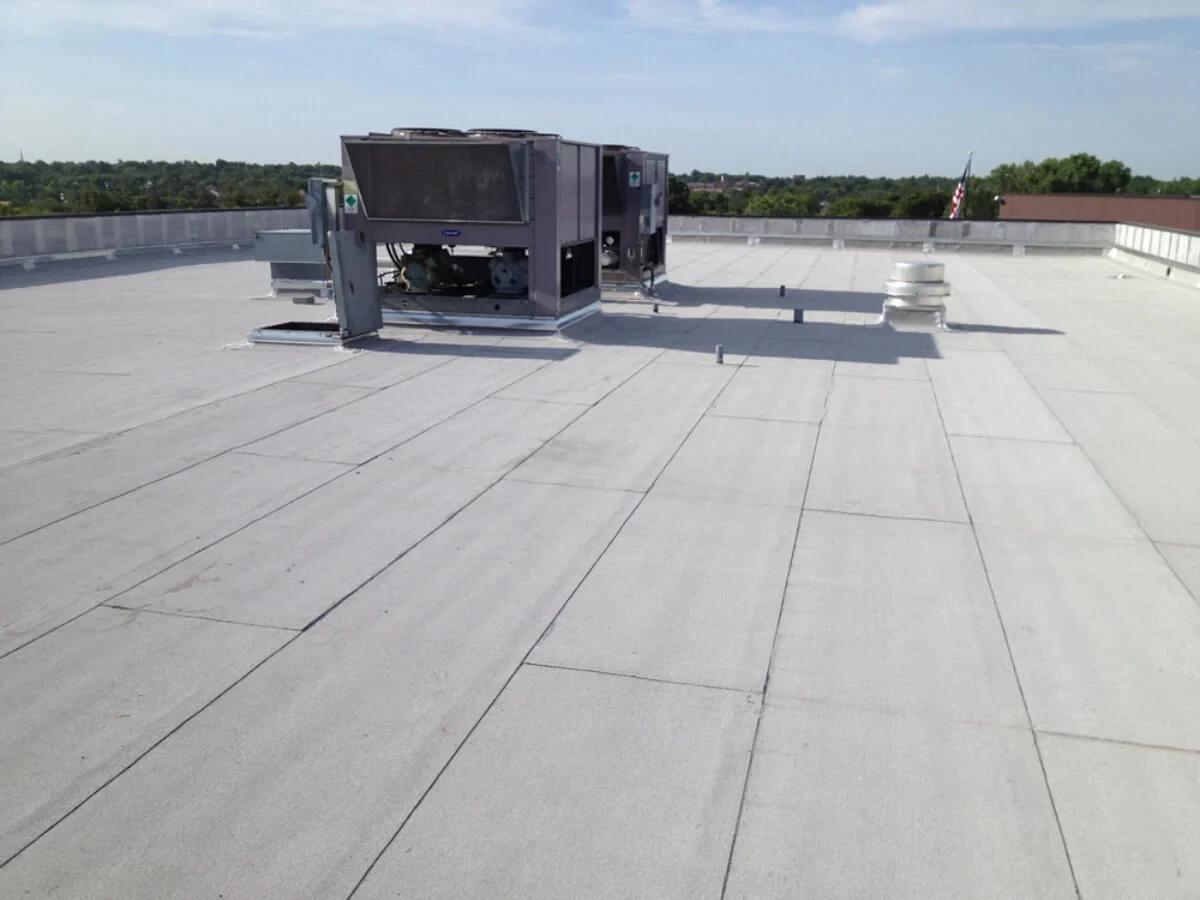
SBS modified bitumen shows up on a lot of our reroof jobs, particularly on multi-tenant retail buildings and older hospitality properties where the existing roof was already a built-up or modified bitumen assembly. It's a multi-ply system with a long track record on flat and low-slope roofs, and coastal wind and salt exposure both factor into how we detail it here.
How an SBS System Goes Together
SBS modified bitumen is asphalt modified with styrene-butadiene-styrene rubber, giving the material flexibility that straight asphalt roofing doesn't have. Most of the systems we install use a base ply and a cap sheet, either torch-applied, hot-mopped, cold-adhesive applied, or self-adhered depending on the building, tenant occupancy, and fire code considerations for that specific site. Multi-tenant retail buildings and occupied hospitality properties often steer us toward cold-adhesive or self-adhered application rather than torch work, since open-flame application isn't always practical on an occupied building with tenants and guests below.
The cap sheet finish also matters for performance. Granulated cap sheets give some UV protection on their own, while a smooth cap sheet paired with a reflective coating gives better heat performance for buildings running heavy HVAC load through the summer season.
Wind Uplift Detailing on Multi-Ply Systems
Coastal Horry County's wind design pressures apply to modified bitumen the same way they apply to single-ply membranes, and the fastening or adhesion pattern at the perimeter and corners of the roof is where the system either holds or fails in high wind. Base sheet attachment - mechanically fastened, adhered, or a combination depending on the deck - gets tighter spacing in those edge zones, and cap sheet adhesion has to be complete rather than spot-bonded for the system to perform under uplift pressure.
We've serviced enough modified bitumen roofs after tropical storms moving up from Florida to know that edge and flashing detailing is where these systems fail first, not the field membrane. Base flashings at parapet walls, curbs, and penetrations get the same attention as the fastening pattern on every SBS job we do near the coast.
Surfacing Choices for Heat and Salt Exposure
A granulated cap sheet resists UV degradation reasonably well on its own and needs less ongoing maintenance than a smooth, coated surface. For buildings where reducing rooftop heat load is a priority - hotels and retail centers running HVAC and refrigeration most of the year - we'll spec a smooth cap sheet with a reflective coating instead, understanding that the coating needs periodic recoating to maintain reflectivity over the roof's life.
Salt-laden coastal air affects the metal flashing, edge details, and fasteners tied into a modified bitumen system the same way it affects single-ply roofs. We use corrosion-resistant metal and hardware on these components regardless of which membrane system sits above them, since replacing failed edge metal on an otherwise sound modified bitumen roof is a common repair call we get from buildings within a mile or two of the ocean.
- SBS rubber modification gives flexibility beyond standard asphalt roofing
- Cold-adhesive or self-adhered application common on occupied hospitality buildings
- Complete cap sheet adhesion required at perimeter zones for wind uplift performance
- Granulated cap sheets need less maintenance than smooth coated surfaces
- Reflective coated systems reduce HVAC load but require periodic recoating
- Corrosion-resistant edge metal and fasteners for coastal salt exposure
When SBS Makes More Sense Than Single-Ply
We look at SBS modified bitumen when an existing roof is already a multi-ply asphalt system in reasonable condition and converting to single-ply isn't cost-effective, when a building's tenant occupancy or fire code situation favors cold-adhesive application over torch work, or when the roof geometry has enough penetrations and detail work that a redundant multi-ply base system offers more margin for error during installation. For simpler roof geometries without an existing asphalt system to build on, TPO or PVC often makes more sense.
Ply Count and Redundancy on Multi-Tenant Buildings
Multi-tenant retail buildings with a lot of rooftop penetrations from separate tenant HVAC units benefit from the redundancy a two-ply modified bitumen assembly offers over a single-ply membrane. If a penetration flashing develops a small issue between inspections, a base ply underneath the cap sheet gives a second line of defense against water reaching the deck, which matters on buildings where a dozen or more separate tenants are each cutting new roof penetrations for their own equipment over the years. That redundancy is one of the practical reasons we keep recommending SBS systems on some of these properties rather than pushing every reroof toward single-ply.
Common Questions on SBS Modified Bitumen
Is modified bitumen roofing outdated compared to TPO?
No, it's a different category with its own strengths, particularly for buildings converting from an existing asphalt roof system or needing the redundancy of a multi-ply assembly. It's a matter of fit, not one system being universally better.
Can SBS roofing be torch-applied on occupied buildings?
It can, but we usually recommend cold-adhesive or self-adhered application on occupied hospitality and retail buildings to avoid open-flame work near tenants and guests.
How does modified bitumen handle hurricane-force wind?
Performance depends on base sheet attachment and complete cap sheet adhesion, particularly at the perimeter and flashing details, which is where we concentrate detailing attention on coastal jobs.
Does a granulated surface eliminate the need for coating?
Granulated cap sheets provide inherent UV protection without a coating, though buildings prioritizing reflectivity and reduced heat gain still benefit from a smooth cap sheet with reflective coating instead.
How often does a coated modified bitumen roof need recoating?
It depends on coating type and coastal exposure, but we check coating condition at every maintenance visit and recommend recoating before reflectivity and protection have degraded significantly.