
Where Salt Air Attacks a Roof First
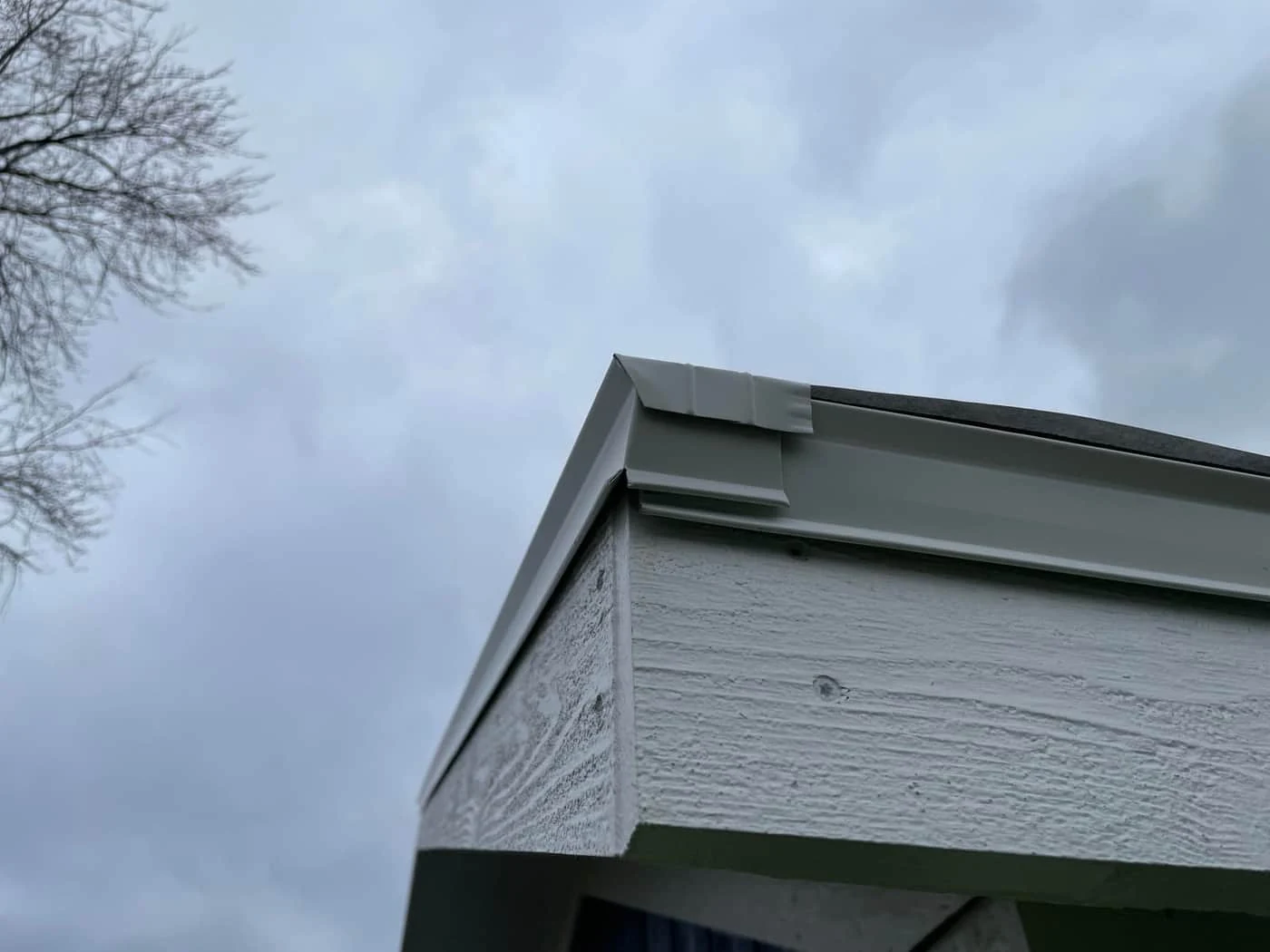
Before a membrane fails, the metal around the edges usually shows trouble first. Edge metal, coping caps, and gutters take the brunt of salt-laden air off the Atlantic, and they're also the components doing the most work to keep wind from getting a grip on the roof during a storm. On the Strand, this is where we spend a disproportionate share of our repair calls.
Why Edge Metal Matters More Than It Looks Like It Should
Perimeter and corner zones see the highest wind uplift loads on a flat roof, and edge metal is the component holding the membrane's outer termination in place against that load. When edge metal fasteners corrode and loosen, or when a coping joint opens up and lets wind get underneath, that's frequently the starting point of a much larger membrane failure during a named storm. A roof that otherwise looks sound can peel back from a single failed section of edge detail once wind finds the opening.
How Salt Air Actually Corrodes These Components
Airborne salt from the ocean settles on exposed metal and accelerates oxidation, particularly at fastener heads, cut edges, and any point where the protective coating has been scratched or worn through. Properties within a few miles of the coast, which describes most of the commercial buildings between the Waterway and the beach, see this corrosion at a noticeably faster rate than the same materials would experience forty or fifty miles inland. Galvanized and painted steel edge metal is more vulnerable than aluminum, and even aluminum shows pitting over enough years of salt exposure without maintenance.
Fastener corrosion is usually the first visible sign, showing as rust streaks running down the fascia below the edge metal line. By the time that streaking is visible, the fasteners underneath have often lost a meaningful amount of holding strength.
Coping Joints and Where Water Gets Behind Parapet Walls
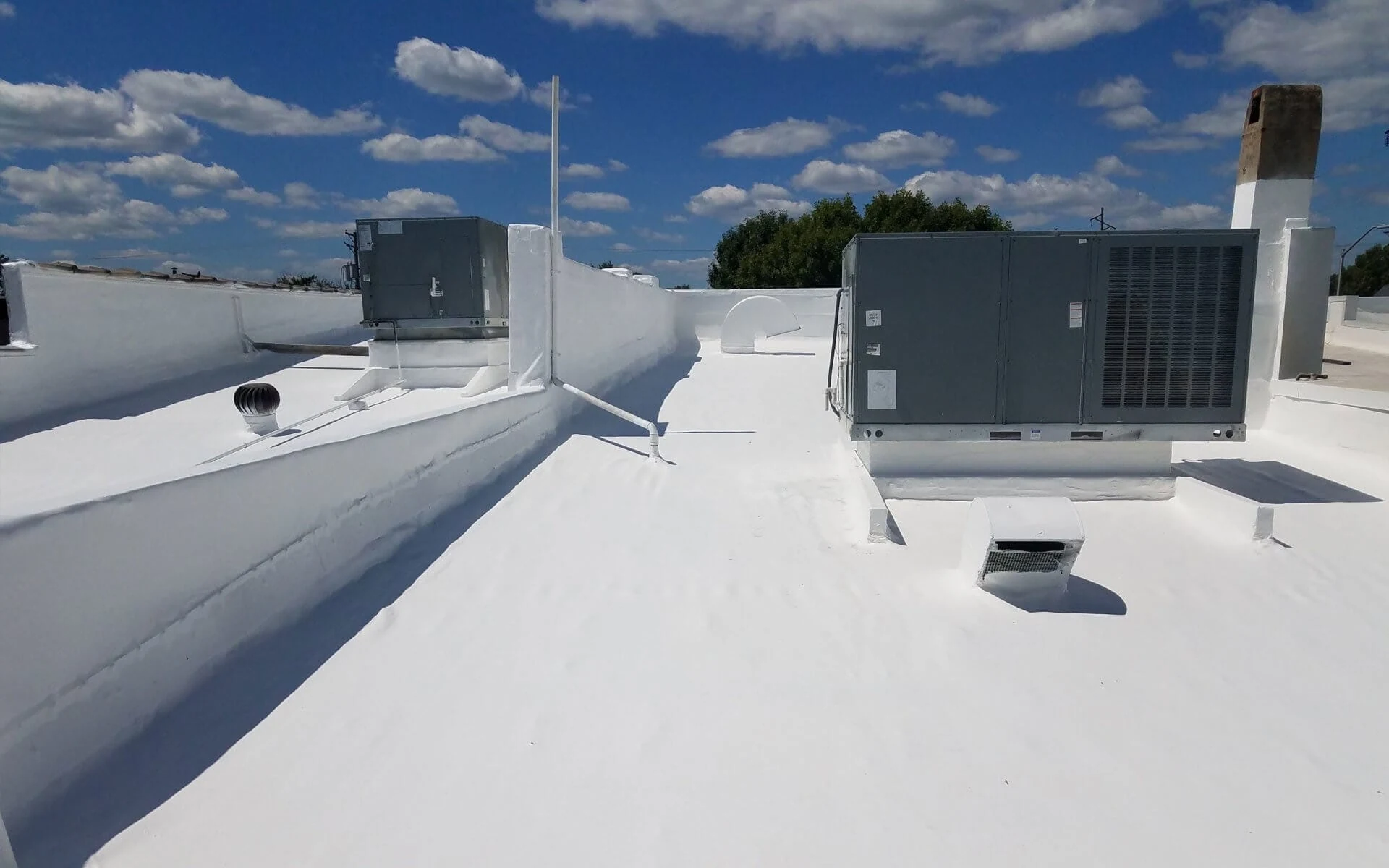
Coping caps on parapet walls rely on their joints and end laps staying sealed to keep water from getting into the parapet cavity. Thermal expansion and contraction gradually work these joints open over years, and once water gets behind a parapet wall, it can travel down inside the wall cavity and show up as an interior leak far from the actual entry point. We check coping joint condition as a standard part of any roof inspection, since it's an easy item to miss from a casual glance but a common source of hard-to-trace leaks.
Gutters and Downspouts on Flat Roof Systems
Not every flat commercial roof uses internal drains; many properties along retail corridors and older hotel buildings rely on perimeter gutters and downspouts instead. These systems clog easily with wind-blown debris, sand, and roofing granules, and a clogged gutter during a heavy tropical downpour backs water up against the roof edge rather than moving it away from the building. We check gutter slope, hanger condition, and downspout function as part of edge system service, not as a separate afterthought.
Repair Versus Full Replacement
Isolated fastener corrosion or a single opened coping joint is usually a straightforward repair. Widespread corrosion across a roof's perimeter, especially on an older building that's never had edge metal replaced, often makes more sense as a full edge metal replacement done in coordination with a reroof or standalone project. We assess the extent of corrosion honestly and tell you which category your building falls into rather than defaulting to the more expensive option.
- Fastener and joint inspection at all coping and edge metal runs
- Corrosion assessment specific to coastal salt exposure
- Coping joint resealing or replacement where thermal movement has opened seams
- Gutter and downspout clearing, slope check, and hanger repair
- Edge metal reattachment or replacement to current wind uplift fastening standards
- Documentation of findings for maintenance and capital planning records
Timing Edge Metal Work Around Storm Season
Edge metal and coping repairs are exactly the kind of work worth finishing before hurricane season opens, since these components are directly tied to how well a roof resists wind uplift once a storm arrives. We prioritize edge system repairs found during spring inspections precisely because of this timing, rather than letting them sit on a maintenance list through the season they matter most.
What This Means for Older Buildings
Hotel and retail buildings built decades ago along Ocean Boulevard and Kings Highway often have edge metal that's never been replaced, only patched. At some point, patch repairs on heavily corroded edge metal stop being cost-effective compared to a full replacement, and we'll tell you plainly when a building has reached that point rather than continuing to bill for incremental fixes on a system that's structurally past its useful life.
Edge Metal Questions
How often should edge metal and coping be inspected?
At minimum during your twice-yearly roof inspections, with closer attention in spring ahead of hurricane season given the direct link to wind uplift resistance.
Can corroded edge metal be repaired without replacing the whole run?
Often, yes, for isolated sections. Widespread corrosion across a perimeter usually makes full replacement more practical than repeated spot repairs.
Why do gutters clog so often on flat roofs here?
Palm frond debris, wind-blown sand, and granule washoff from aging membranes are the main culprits, and they accumulate faster on coastal properties than inland buildings.
Does edge metal condition affect insurance considerations?
Documented edge metal condition can factor into how storm damage claims are assessed, since compromised edge detail is often the starting point of larger wind damage.
Is aluminum edge metal worth the extra cost over galvanized steel here?
Aluminum resists salt corrosion better over time, which can be worth the upfront cost difference on oceanfront or near-oceanfront buildings. We'll walk through the tradeoff for your specific property.